

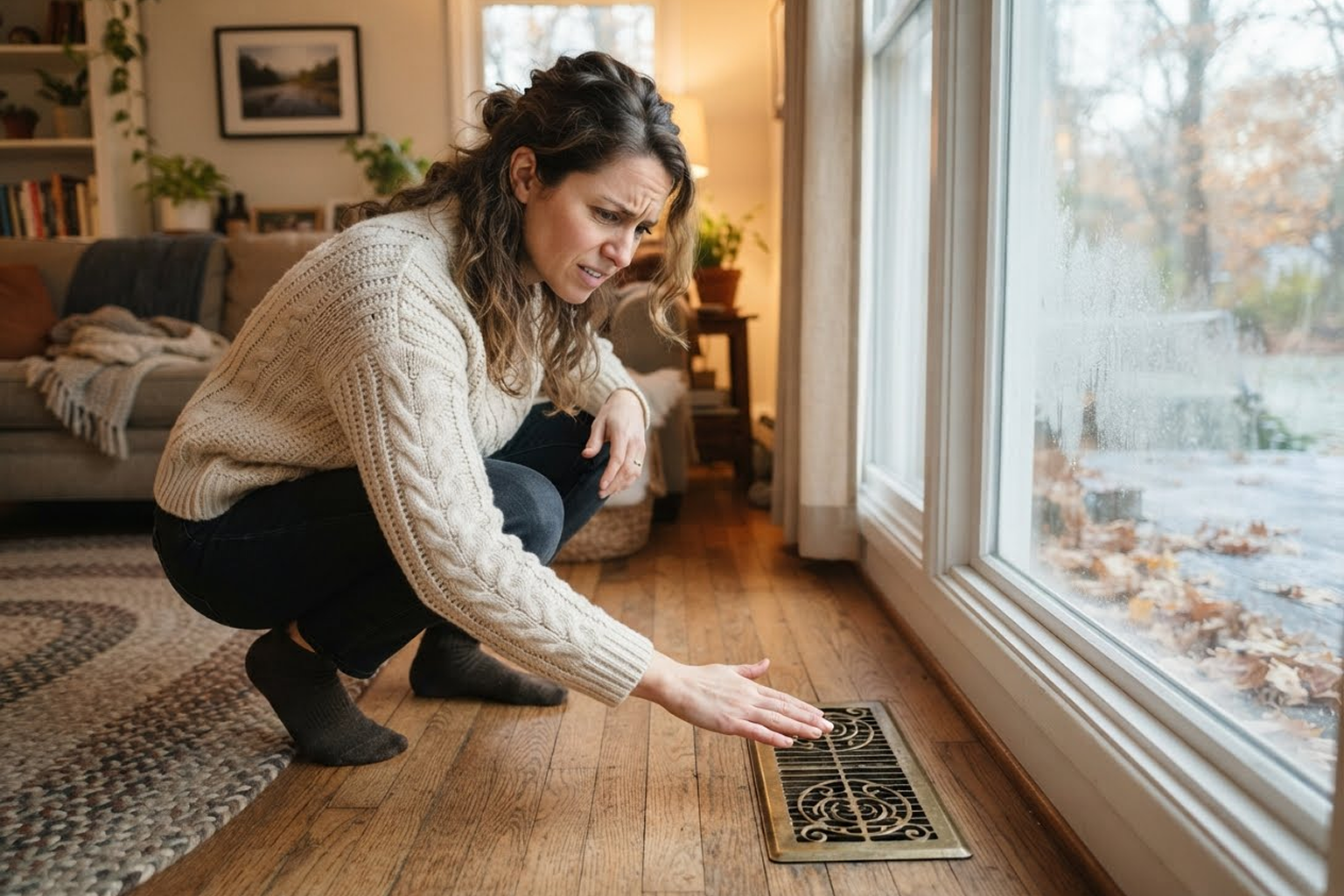
A furnace blowing cold air is most often caused by the thermostat fan being set to “On” instead of “Auto”, a clogged air filter that makes the furnace overheat and shut off its burners, or a dirty flame sensor that shuts the burners off seconds after they light. Fix the fan setting and the filter yourself. If the air is still cold, the cause is usually ignition, the flame sensor or a safety control, and that needs a licensed technician.
The blower is running, the vents are moving air, and the air is cold. It feels like the furnace is working, but the heat is not coming. The good news: the most common causes are also the easiest to check.
Below are the causes in the order we find them on service calls in North Jersey, how to tell which one you have, and which ones need a technician.
Safety first: If you smell gas, leave the house and call your gas utility or 911 from outside. If your carbon monoxide alarm sounds, leave and call 911. Do not try to restart the furnace.
When the Cold Air Happens Tells You the Cause
Before you check anything, notice when the cold air comes out. It narrows the cause down fast.
| When you feel cold air |
Most likely cause |
|---|---|
|
|
|
|
|
|
|
|
|
|
|
|
1. The Thermostat Fan Is Set to “On”
This is the most common cause, and the easiest fix. With the fan set to “On”, the blower runs all the time, including between heating cycles when the burners are off. The air feels cool because it is room-temperature air moving across your skin.
Fix: Set the fan to “Auto”, so the blower runs only when the furnace is heating. While you are there, confirm the mode is “Heat” and the setpoint is above the room temperature.
2. The Furnace Has Not Warmed Up Yet
Some furnaces start the blower within about a minute of the burners lighting. For those first moments, the air from the vents can feel cool.
Fix: Wait a few minutes. If the air turns warm, the furnace is working normally. If it stays cold, keep reading.
3. A Clogged Air Filter Is Making the Furnace Overheat
When the filter is clogged, not enough air moves across the heat exchanger. It overheats, and a safety control called the high limit switch shuts the burners off. The blower keeps running to cool the furnace down, so cold air comes out of the vents. Once it cools, the burners relight, and the cycle repeats.
Fix: Replace the filter if it is gray or caked with dust. Change it every one to three months. Also check that supply vents and return grilles are open and not blocked by furniture, rugs or curtains.
If a new filter does not stop it, the cause may be a weak blower motor, a dirty coil or restricted ductwork. That needs a technician.
4. A Dirty Flame Sensor Is Shutting the Burners Off
The flame sensor is a thin metal rod in the burner flame that proves to the control board that the gas is lit. When it gets coated with residue, it cannot prove the flame, so the board shuts the gas off within a few seconds of lighting. The blower may run on, pushing cold air. After a few tries, the furnace locks out.
How to tell: You hear the burners light, then they go out within seconds, and the furnace tries again.
Fix: Call a technician. The sensor sits inside the burner compartment next to the gas burners and ignitor. A technician cleans or replaces it, tests the flame signal, and checks why it got dirty.
5. The Ignitor Has Failed or the Pilot Light Is Out
If the burners never light, the furnace cannot make heat, but on some furnaces the blower still runs.
- Hot surface ignitor: Most modern furnaces use an ignitor that glows orange to light the gas. They are fragile and crack with age. Replacing one is a technician job.
- Standing pilot: Older furnaces have a pilot flame that burns all the time. If it is out, follow the lighting instructions on the furnace label exactly, if you are comfortable doing so. If it will not stay lit, or you smell gas, stop and call.
6. The Gas Supply Is Off or Interrupted
Check that the manual gas valve on the pipe leading into the furnace is open, with the handle parallel to the pipe. If your stove or water heater is also not working, the issue may be your gas service, so call your gas utility.
Do not touch the furnace’s own gas valve or burners.
7. A Blocked Condensate Drain on a High-Efficiency Furnace
High-efficiency furnaces make water, which drains through a small tube or a condensate pump. If it backs up, a safety switch can stop the burners while the fan keeps running. Look for water around the furnace or in the pump. If you see it, call us to clear the trap and test the pump and switch.
8. Leaking or Disconnected Ductwork
If the furnace is making heat but some rooms get cool air, the heat may be escaping before it reaches them. A duct that has come apart in the attic, crawl space or basement will blow warm air into a space you do not heat. Leaky ducts also pull in cold air.
How to tell: Some rooms are warm and others are cold, and the far rooms are worst. We handle air duct repair to find and seal leaks and reconnect ducts.
9. An Electric Furnace With a Failed Element or Sequencer
Electric furnaces heat with resistance elements instead of burners. If one or more elements fail, or the sequencer or relay that switches them on stops working, the blower runs but the air is cool or lukewarm. These are high-voltage parts, so this is always a technician repair.
10. A Cracked Heat Exchanger or Failing Safety Check
Sometimes a furnace keeps shutting its burners off because it is failing a safety check, and the cause is more serious, such as a cracked heat exchanger. A crack can let combustion gases, including carbon monoxide, into the air. Signs include a yellow or flickering flame, soot around the furnace, or a carbon monoxide alarm.
Fix: Turn the furnace off and call a technician. If the CO alarm sounds, leave the house and call 911 first.
What You Can Check vs. What Needs a Technician
| Cause | Homeowner check |
Technician repair |
|---|---|---|
|
|
|
|
|
|
|
|
|
|
|
|
|
|
|
|
|
|
|
|
|
|
|
|
|
|
|
|
|
|
|
|
|
Should You Turn the Furnace Off if It Is Blowing Cold Air?
If the fan setting and the filter were not the cause, yes. Turn the thermostat to “Off” and call for furnace repair. A furnace that keeps cycling on a safety control wears out its parts faster, and running the blower with no heat only cools the house down.
Turn it off right away and call if you notice a yellow flame, soot, a burning or gas smell, or a carbon monoxide alarm.
We offer same-day furnace repair across Passaic, Morris and Essex Counties from our Pompton Lakes shop, including next door in Riverdale.
Frequently Asked Questions
Why is my furnace blowing cool air when the heat is on?
Most often, the fan is set to “On”, the filter is clogged and the furnace is overheating, or the flame sensor is shutting the burners off. Check the fan setting and the filter first. If those are fine, call a technician.
How do you fix a furnace that blows cold air?
Set the thermostat fan to “Auto”, confirm the mode is “Heat”, and replace a dirty filter. If the air is still cold, the cause is usually the flame sensor, the ignitor or a safety control, which a technician needs to repair.
How do I reset my furnace?
On most furnaces, turning the power switch off for a minute and back on restarts the control board. If it locks out or blows cold again, do not keep resetting it. Call a technician, because the lockout is a safety response.
Why is my furnace running but there is no heat?
If the blower is running but the burners are not lit, the furnace has either failed to light (ignitor, pilot, gas supply) or shut the burners off on a safety control (flame sensor, high limit, condensate switch). The timing table above helps you tell which.
Can an old furnace start blowing cold air because of its age?
Yes. Ignitors, flame sensors and blower parts wear out over time. If your furnace is 15 years old or more and needs repeated repairs, it is worth pricing a furnace replacement before you spend more.
Stop Cold Air Before It Starts
Most of the causes in this guide, from a dirty flame sensor to a clogged filter or a blocked drain, are found and fixed during a yearly tune-up. The SM Comfort Club includes seasonal heating and cooling tune-ups, safety checks, priority scheduling and member-only savings on repairs, so the first cold night of the year is not when you find out.