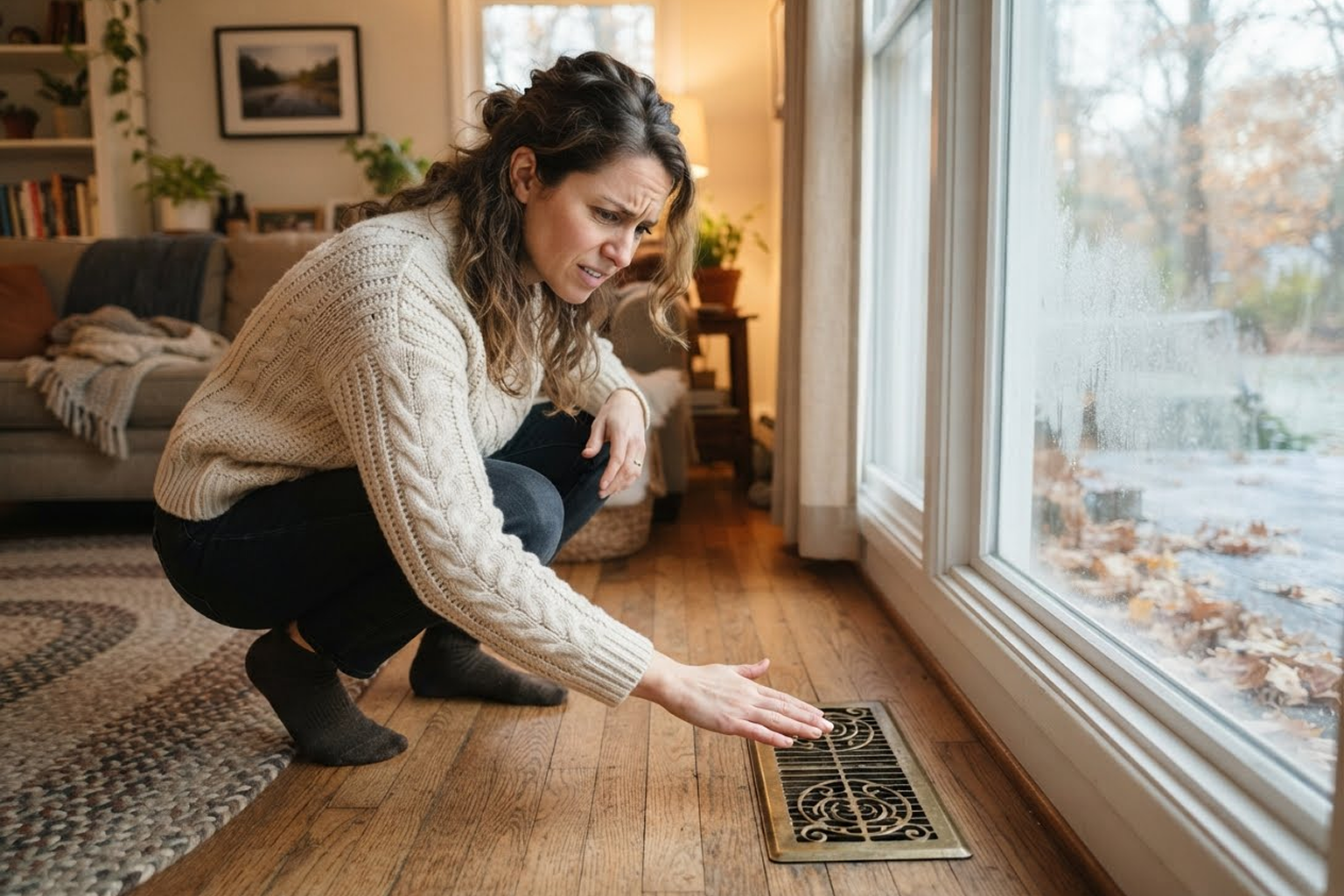
Furnace blowing cold air: the likely causes, most common first

A furnace blowing cold air is most often caused by the thermostat fan being set to “On” instead of “Auto”, a clogged air filter that makes the furnace overheat and shut off its burners, or a dirty flame sensor that shuts the burners off seconds after they light. Fix the fan setting and the filter yourself. If the air is still cold, the cause is usually ignition, the flame sensor or a safety control, and that needs a licensed technician.

The blower is running, the vents are moving air, and the air is cold. It feels like the furnace is working, but the heat is not coming. The good news: the most common causes are also the easiest to check.

Below are the causes in the order we find them on service calls in North Jersey, how to tell which one you have, and which ones need a technician.

Safety first: If you smell gas, leave the house and call your gas utility or 911 from outside. If your carbon monoxide alarm sounds, leave and call 911. Do not try to restart the furnace.

When the Cold Air Happens Tells You the Cause

Before you check anything, notice when the cold air comes out. It narrows the cause down fast.

When you feel cold air

Most likely cause 

  • For the first minute after the furnace starts, then it warms up
  • Normal. The blower may start before the heat exchanger is fully warm
  • Between heating cycles, all the time
  • Thermostat fan set to “On”
  • The whole time, and the burners never light
  • Ignitor, pilot light, gas supply or a pressure switch problem
  • Warm for a few seconds, then cold, and it repeats
  • Dirty flame sensor
  • Warm for several minutes, then cold while the fan keeps running
  • Overheating from a clogged filter or blocked vents, tripping the high limit
  • Only in some rooms, while others are warm
  • Ductwork: a disconnected or leaking duct, or closed vents

1. The Thermostat Fan Is Set to “On”

This is the most common cause, and the easiest fix. With the fan set to “On”, the blower runs all the time, including between heating cycles when the burners are off. The air feels cool because it is room-temperature air moving across your skin.

Fix: Set the fan to “Auto”, so the blower runs only when the furnace is heating. While you are there, confirm the mode is “Heat” and the setpoint is above the room temperature.

2. The Furnace Has Not Warmed Up Yet

Some furnaces start the blower within about a minute of the burners lighting. For those first moments, the air from the vents can feel cool.

Fix: Wait a few minutes. If the air turns warm, the furnace is working normally. If it stays cold, keep reading.

3. A Clogged Air Filter Is Making the Furnace Overheat

When the filter is clogged, not enough air moves across the heat exchanger. It overheats, and a safety control called the high limit switch shuts the burners off. The blower keeps running to cool the furnace down, so cold air comes out of the vents. Once it cools, the burners relight, and the cycle repeats.

Fix: Replace the filter if it is gray or caked with dust. Change it every one to three months. Also check that supply vents and return grilles are open and not blocked by furniture, rugs or curtains.

If a new filter does not stop it, the cause may be a weak blower motor, a dirty coil or restricted ductwork. That needs a technician.

4. A Dirty Flame Sensor Is Shutting the Burners Off

The flame sensor is a thin metal rod in the burner flame that proves to the control board that the gas is lit. When it gets coated with residue, it cannot prove the flame, so the board shuts the gas off within a few seconds of lighting. The blower may run on, pushing cold air. After a few tries, the furnace locks out.

How to tell: You hear the burners light, then they go out within seconds, and the furnace tries again.

Fix: Call a technician. The sensor sits inside the burner compartment next to the gas burners and ignitor. A technician cleans or replaces it, tests the flame signal, and checks why it got dirty.

5. The Ignitor Has Failed or the Pilot Light Is Out

If the burners never light, the furnace cannot make heat, but on some furnaces the blower still runs.

  • Hot surface ignitor: Most modern furnaces use an ignitor that glows orange to light the gas. They are fragile and crack with age. Replacing one is a technician job.
  • Standing pilot: Older furnaces have a pilot flame that burns all the time. If it is out, follow the lighting instructions on the furnace label exactly, if you are comfortable doing so. If it will not stay lit, or you smell gas, stop and call.

6. The Gas Supply Is Off or Interrupted

Check that the manual gas valve on the pipe leading into the furnace is open, with the handle parallel to the pipe. If your stove or water heater is also not working, the issue may be your gas service, so call your gas utility.

Do not touch the furnace’s own gas valve or burners.

7. A Blocked Condensate Drain on a High-Efficiency Furnace

High-efficiency furnaces make water, which drains through a small tube or a condensate pump. If it backs up, a safety switch can stop the burners while the fan keeps running. Look for water around the furnace or in the pump. If you see it, call us to clear the trap and test the pump and switch.

8. Leaking or Disconnected Ductwork

If the furnace is making heat but some rooms get cool air, the heat may be escaping before it reaches them. A duct that has come apart in the attic, crawl space or basement will blow warm air into a space you do not heat. Leaky ducts also pull in cold air.

How to tell: Some rooms are warm and others are cold, and the far rooms are worst. We handle air duct repair to find and seal leaks and reconnect ducts.

9. An Electric Furnace With a Failed Element or Sequencer

Electric furnaces heat with resistance elements instead of burners. If one or more elements fail, or the sequencer or relay that switches them on stops working, the blower runs but the air is cool or lukewarm. These are high-voltage parts, so this is always a technician repair.

10. A Cracked Heat Exchanger or Failing Safety Check

Sometimes a furnace keeps shutting its burners off because it is failing a safety check, and the cause is more serious, such as a cracked heat exchanger. A crack can let combustion gases, including carbon monoxide, into the air. Signs include a yellow or flickering flame, soot around the furnace, or a carbon monoxide alarm.

Fix: Turn the furnace off and call a technician. If the CO alarm sounds, leave the house and call 911 first.

What You Can Check vs. What Needs a Technician

Cause Homeowner check

Technician repair 

  • Fan set to “On”
  • Yes, set to “Auto”
  • Normal warm-up delay
  • Yes, wait a few minutes
  • Clogged filter or blocked vents
  • Yes, replace the filter, open the vents
  • If it keeps overheating
  • Dirty flame sensor
  • Yes
  • Failed ignitor
  • Yes
  • Pilot light out
  • Relight only by the label instructions
  • If it will not stay lit
  • Gas supply
  • Check that the manual valve is open
  • Anything on the furnace gas valve or burners
  • Condensate backup
  • Look for water
  • Yes, clear and test
  • Leaking or disconnected ducts
  • Notice which rooms are cold
  • Yes, find and seal
  • Electric furnace elements
  • Yes
  • Cracked heat exchanger
  • Turn the furnace off
  • Yes, right away

Should You Turn the Furnace Off if It Is Blowing Cold Air?

If the fan setting and the filter were not the cause, yes. Turn the thermostat to “Off” and call for furnace repair. A furnace that keeps cycling on a safety control wears out its parts faster, and running the blower with no heat only cools the house down.

Turn it off right away and call if you notice a yellow flame, soot, a burning or gas smell, or a carbon monoxide alarm.

We offer same-day furnace repair across Passaic, Morris and Essex Counties from our Pompton Lakes shop, including next door in Riverdale.

Frequently Asked Questions

Why is my furnace blowing cool air when the heat is on?

Most often, the fan is set to “On”, the filter is clogged and the furnace is overheating, or the flame sensor is shutting the burners off. Check the fan setting and the filter first. If those are fine, call a technician.

How do you fix a furnace that blows cold air?

Set the thermostat fan to “Auto”, confirm the mode is “Heat”, and replace a dirty filter. If the air is still cold, the cause is usually the flame sensor, the ignitor or a safety control, which a technician needs to repair.

How do I reset my furnace?

On most furnaces, turning the power switch off for a minute and back on restarts the control board. If it locks out or blows cold again, do not keep resetting it. Call a technician, because the lockout is a safety response.

Why is my furnace running but there is no heat?

If the blower is running but the burners are not lit, the furnace has either failed to light (ignitor, pilot, gas supply) or shut the burners off on a safety control (flame sensor, high limit, condensate switch). The timing table above helps you tell which.

Can an old furnace start blowing cold air because of its age?

Yes. Ignitors, flame sensors and blower parts wear out over time. If your furnace is 15 years old or more and needs repeated repairs, it is worth pricing a furnace replacement before you spend more.

Stop Cold Air Before It Starts

Most of the causes in this guide, from a dirty flame sensor to a clogged filter or a blocked drain, are found and fixed during a yearly tune-up. The SM Comfort Club includes seasonal heating and cooling tune-ups, safety checks, priority scheduling and member-only savings on repairs, so the first cold night of the year is not when you find out.
Call 973-628-6472 | Join the Comfort Club

Furnace not turning on: what to check, and when to call

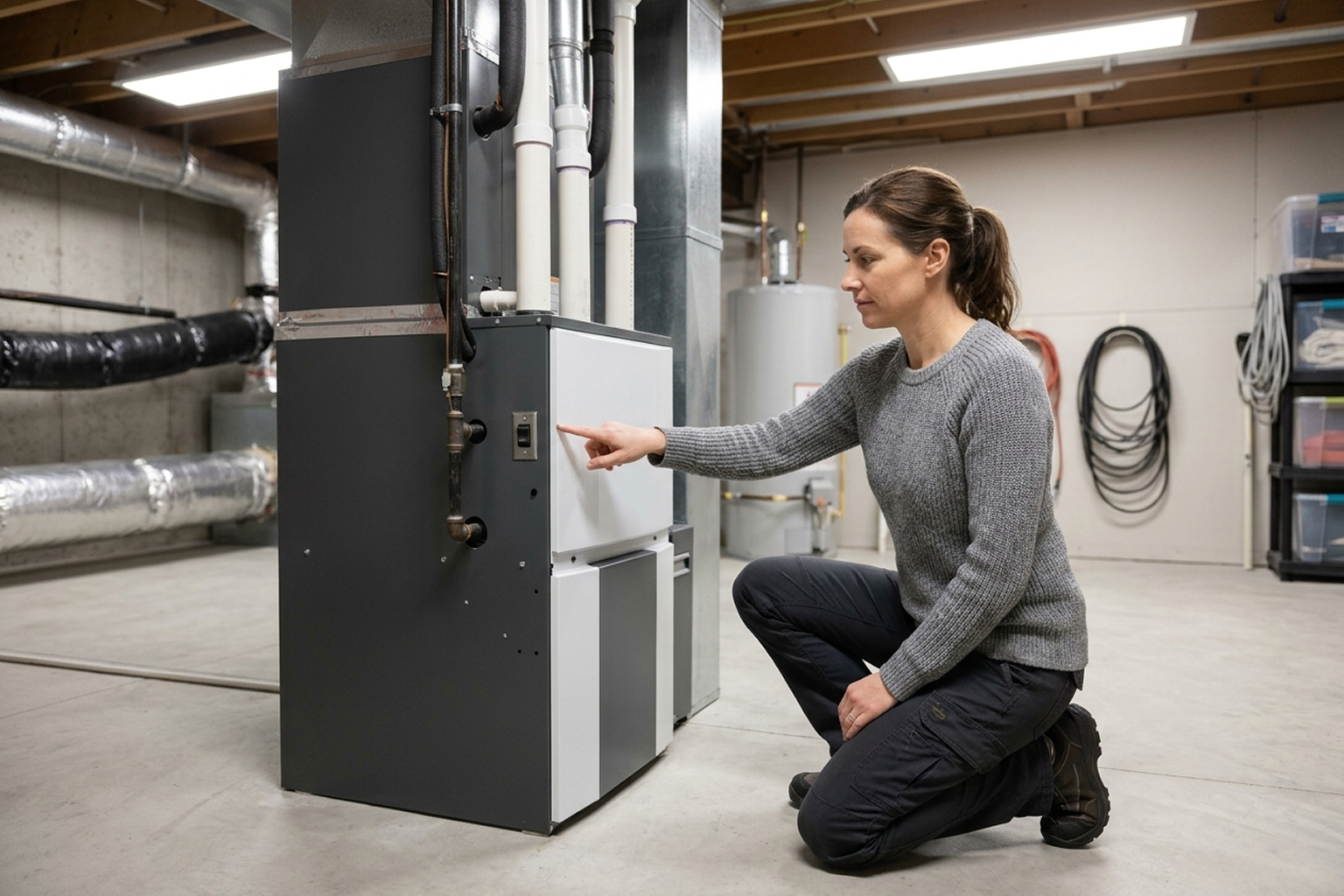
If your furnace is not turning on, check that the thermostat is set to “Heat” above room temperature, the furnace power switch is on, the breaker has not tripped, the filter is clean and the furnace door is fully closed. If all five check out and there is still no heat, the cause is usually inside the furnace (the ignitor, flame sensor, pressure switch or control board), and that is a job for a licensed technician.

It is the first cold night of the year, the thermostat says “Heat”, and nothing happens. Before you call anyone, there are a few checks you can make safely in about ten minutes. They solve a good share of no-heat calls.

This guide covers those checks in order, explains what is going on inside the furnace when they do not work, and tells you when to stop and call.

Safety first: If you smell gas (a rotten egg smell), do not touch the furnace, switches or the thermostat. Leave the house and call your gas utility or 911 from outside. If your carbon monoxide alarm is sounding, leave and call 911.

Step 1: Check the Thermostat Settings and Batteries

Most “furnace not turning on” calls start here.

  • Mode: Set it to “Heat”, not “Cool” or “Off”.
  • Temperature: Set it at least 5°F above the current room temperature, so the furnace has a reason to start.
  • Batteries: If the screen is blank or dim, replace the batteries. Low batteries can keep the screen on but stop the thermostat from signaling the furnace.
  • Schedule: On a programmable or smart thermostat, check that a schedule or “away” setting is not holding the temperature down.

If the thermostat clicks when you raise the temperature but nothing else happens, the signal is probably reaching the furnace, and the problem is further along.

Step 2: Make Sure the Furnace Has Power

Even a gas furnace needs electricity to run the controls, ignitor and blower.

  • Furnace power switch: Look for a switch that looks like a light switch on the side of the furnace or on a nearby wall or ceiling joist. It should be on. These are easy to flip off by mistake.
  • Circuit breaker: In your electrical panel, find the breaker marked “Furnace” or “Heat”. If it is in the middle position, push it fully to “Off” and then back to “On”.

If the breaker trips again, stop. A breaker that trips a second time means an electrical fault. Leave it off and call a technician.

Step 3: Check the Furnace Door

Furnaces have a safety switch behind the front panel. If the panel is loose or not seated after a filter change, the furnace will not start. Make sure the door is pushed fully into place and latched.

Step 4: Check the Air Filter

A clogged filter restricts airflow. The furnace overheats, a safety switch called the high limit shuts the burners off, and after repeated trips some furnaces lock out completely.

Pull the filter out. If it is gray and caked with dust, replace it. Most filters should be changed every one to three months, more often with pets or during heavy use. If you are not sure which filter your system takes, we handle furnace and AC filter replacement as well.

Step 5: Check the Condensate Drain on a High-Efficiency Furnace

High-efficiency furnaces (usually the ones vented with white plastic pipe) produce water. It drains through a small tube to a floor drain or a pump. If the drain line clogs or the pump fails, a float switch shuts the furnace off to prevent a leak.

Look for standing water around the furnace or in the condensate pump. If you see it, call us. Clearing the trap and testing the pump and switch is a quick job for a technician.

Step 6: Confirm the Gas Supply Is On

The manual gas valve on the pipe leading into the furnace should be open, with the handle running parallel to the pipe. If other gas appliances in the house, such as the stove or water heater, are also not working, the issue may be with your gas service. Call your gas utility.

Do not adjust anything on the furnace’s own gas valve or burners.

Step 7: Look at the Status Light, Without Opening the Furnace

Most modern furnaces have a small light on the control board that blinks a code. On many models you can see it through a small window in the lower door. Count the flashes and match them to the chart printed on the inside of the furnace door or in the owner’s manual.

Write the code down. It tells the technician where the startup stopped, even if the furnace starts again on its own later.

Is there a reset button on a furnace? On most furnaces, turning the power switch off for a minute and back on restarts the control board. If the furnace locks out again, do not keep resetting it. Repeated resets can hide a safety problem, and the lockout is there for a reason.

What You Hear and See Tells You Where It Stopped

A gas furnace starts in the same order every time: the thermostat calls for heat, the inducer fan starts, a pressure switch confirms safe venting, the ignitor heats up or sparks, the burners light, the flame sensor proves the flame, and then the blower starts. Where the sequence stops points to the cause.

What happens when the thermostat calls for heat Likely cause Safe to check yourself?


  • Nothing at all: no sound, no light on the furnace
  • Thermostat, power switch, breaker, door switch or a blown fuse on the control board
  • Thermostat, switch, breaker and door: yes. Control board: no
  • A small fan hums, then it stops and tries again
  • Pressure switch not closing: a blocked vent or intake, a clogged condensate trap, or a failing inducer
  • Check outside vents for snow or leaves: yes. Everything else: no
  • Clicking, or an ignitor that glows, but the burners never light
  • Ignitor, gas valve or gas supply
  • No
  • Burners light, then shut off after a few seconds
  • Dirty flame sensor
  • No
  • Burners light and run, but the blower never comes on
  • Blower motor, capacitor or control board
  • No
  • It runs a few minutes, shuts off, then repeats
  • Short cycling from a clogged filter, an overheating limit or a flame sensor problem
  • Filter: yes. The rest: no

The Parts Behind Most No-Heat Calls

Furnace Flame Sensor

The flame sensor is a thin metal rod that sits in the burner flame. It sends a tiny electrical signal to the control board to prove the flame is lit. If no flame is proven within a few seconds, the board closes the gas valve. That is a safety feature: it keeps unburned gas from building up.

Over time the rod gets coated with residue, the signal weakens, and the furnace lights and then shuts off within seconds. After a few tries, it locks out.

Many online videos show homeowners removing and cleaning the sensor. It sits inside the burner compartment next to the gas burners and ignitor, so we recommend leaving it to a technician, who can also test the signal and check whether the real cause is a weak flame or a poor ground.

Furnace Ignitor

Most modern furnaces use a hot surface ignitor: a small element that glows bright orange to light the gas. Ignitors are fragile, wear out with use and often crack. A cracked ignitor will not glow, so the burners never light.

Replacing an ignitor means handling a brittle part next to the gas burners and matching the exact replacement, so it is a technician job. It is one of the most common furnace repairs we make.

Furnace Pilot Light Out

Older furnaces use a standing pilot: a small flame that burns all the time and lights the burners. If the pilot goes out, there is no heat.

If your furnace has a pilot and the lighting instructions are printed on the furnace label, you can follow those steps exactly. If you are not comfortable doing it, if the pilot will not stay lit, or if you smell gas at any point, stop and call. A pilot that keeps going out usually points to a worn thermocouple or a dirty pilot assembly.

Pressure Switch and Inducer Motor

Before the burners can light, the inducer fan pushes exhaust out through the vent and a pressure switch confirms the vent is clear. A blocked vent, a cracked hose, a clogged condensate trap or a weak inducer will stop the startup here. In winter, check that snow or leaves are not blocking the vent pipes outside, but leave everything inside the furnace to a technician.

Safe to Do Yourself vs. Call a Technician

Safe homeowner checks Leave to a licensed technician


  • Thermostat mode, setpoint, batteries and schedule
  • Cleaning or replacing the flame sensor
  • Furnace power switch and breaker (one reset only)
  • Replacing the ignitor
  • Closing the furnace door properly
  • Anything on the gas valve, burners or gas line
  • Replacing the air filter
  • Control board, wiring, fuses and capacitors
  • Clearing snow or leaves from outside vent pipes
  • Inducer motor, pressure switch and blower motor
  • Reading and writing down the status light code
  • Any repeated lockout, tripped breaker or gas smell

When to Call for Furnace Repair Tonight

Call us right away if:

  • You have worked through the checks and there is still no heat.
  • The breaker trips a second time.
  • The furnace locks out again after a reset.
  • You see water around a high-efficiency furnace.
  • The burners light and shut off over and over.
  • The flame looks yellow or lazy instead of crisp blue.
  • The temperature in the house is dropping fast on a cold night.

We offer same-day furnace repair from our shop in Pompton Lakes, across Passaic, Morris, Essex and Bergen Counties. Next door in Riverdale, see our Riverdale heating and cooling service.

What to Tell Us When You Call

Having these details ready shortens the visit:

  • What the furnace does when the thermostat calls for heat (use the table above).
  • The status light code, if you saw one.
  • Whether it is a gas or electric furnace, and roughly how old it is.
  • When the filter was last changed.
  • Whether it stopped suddenly or has been shutting off for a while.

Frequently Asked Questions

Why does my thermostat click but my furnace doesn’t turn on?

The click means the thermostat is sending the call for heat. If the furnace does not respond, check the power switch, the breaker and the furnace door. If those are fine, the fault is in the furnace’s startup sequence, such as the inducer, pressure switch, ignitor or control board.

What fails first on a furnace?

The parts that wear out most often are the ignitor and the flame sensor, followed by capacitors, inducer motors and pressure switches. A clogged air filter is the most common cause of shutdowns that are not a failed part at all.

Why is my furnace short cycling?

Short cycling, where the furnace starts and stops every few minutes, is usually caused by a clogged filter, an overheating limit switch, a dirty flame sensor or a thermostat in the wrong spot. Replace the filter first. If it continues, call a technician, because short cycling wears out parts quickly.

Can I clean the flame sensor myself?

It sits inside the burner compartment next to the gas burners and ignitor, so we recommend a technician do it. They can also test the flame signal and find out why the sensor got dirty in the first place.

How do I keep my furnace from failing next winter?

Change the filter every one to three months and book a yearly tune-up before the heating season. A tune-up cleans the flame sensor, checks the ignitor and tests the safety controls, which covers most of the causes in this guide.

Is It Time to Repair or Replace?

If your furnace is under 15 years old, a no-start is usually a single failed part and worth repairing. If it is older and this is the latest in a string of repairs, it is worth pricing a furnace replacement before you spend more.

Want a number first? Our free HVAC cost calculator shows you a price range for a new system in about 30 seconds, before anyone comes out.

Call 973-628-6472 | Try the HVAC Cost Calculator